A Conversation About What Comes Next for Women’s Professional Flag Football
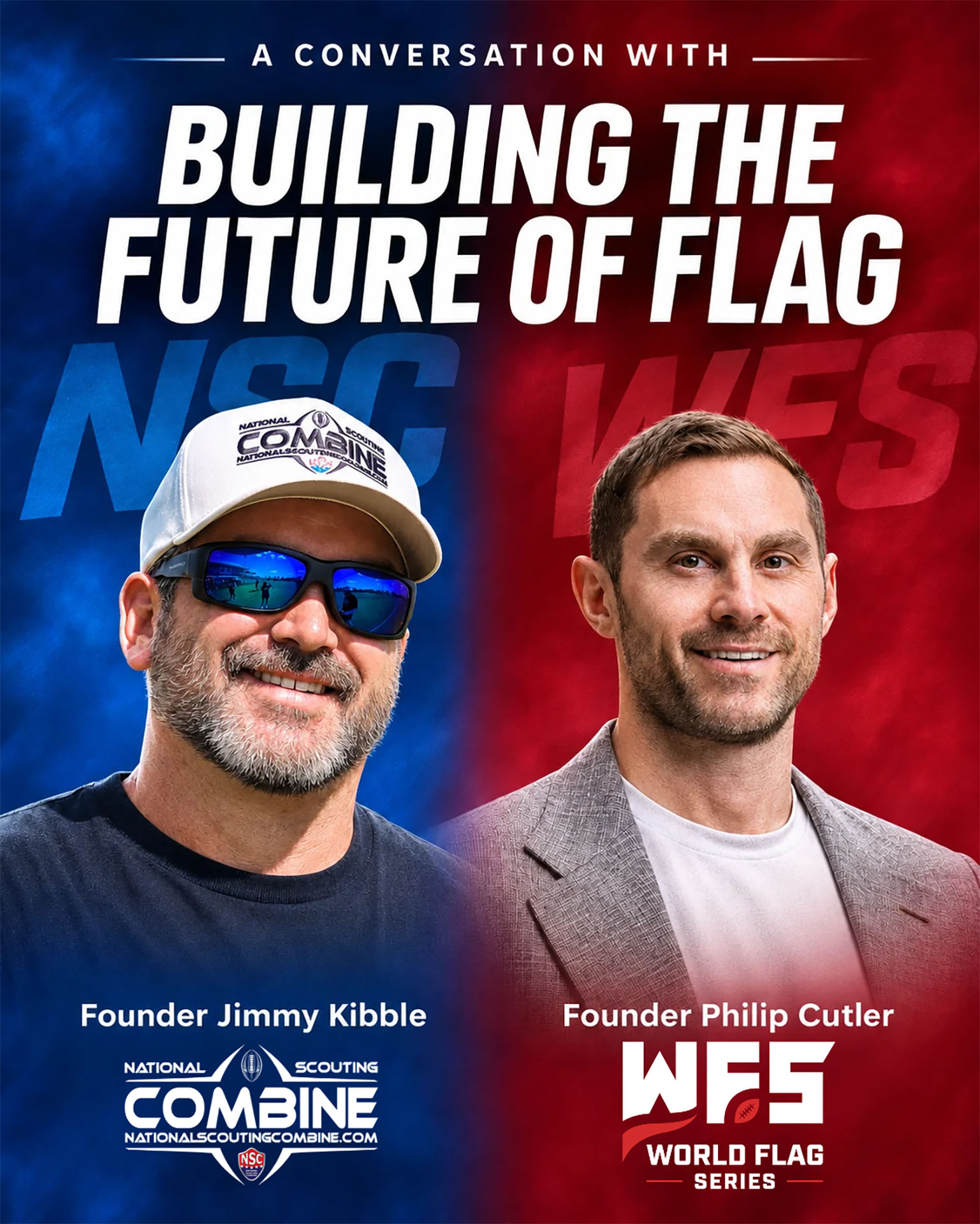
National Scouting Combine sat down with World Flag Series founder Philip Cutler and NSC founder Jimmy Kibble to discuss their partnership, the January 7 Naples combine and tryout, and how verified evaluation can help athletes and a growing league move forward.
Halfway through the World Flag Series’ first event in Tampa, founder Philip Cutler stopped by the merchandise store to see how things were going. A fan asked for a H.E.R. jersey bearing the name of player Haylie Young. Cutler went to find one—but the jerseys had already sold out.
The fan, as it happened, was Young’s brother-in-law.
“It was a little awkward, but I loved what it told us,” Cutler said. “Halfway through our first event, fans already wanted to wear Haylie Young’s name on their backs.”
That story came up when the National Scouting Combine sat down with Cutler and NSC founder Jimmy Kibble to talk about the future of women’s professional flag football—and how the two organizations can help shape it. For Cutler, the sold-out jerseys captured what he hopes to build: a professional league with players fans recognize, cheer for, and return to see.
As the World Flag Series (WFS) works toward a full season in 2027, it is partnering with NSC to help find the athletes who can make those moments happen—and give women a clearer path to professional flag football.
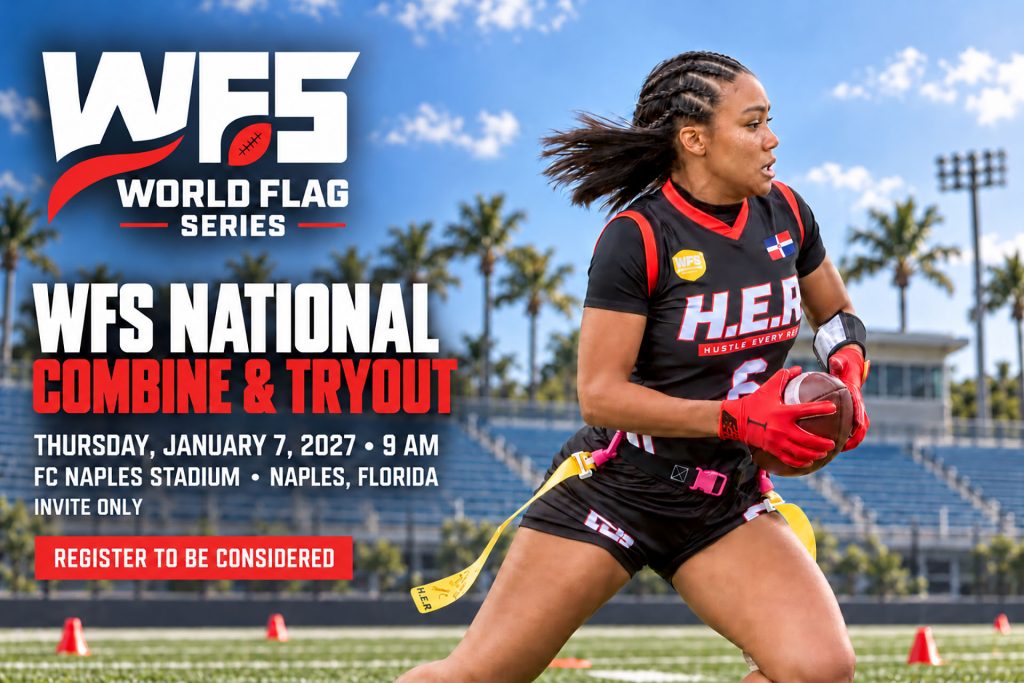
The partnership will take shape on Thursday, January 7, 2027, at Paradise Coast Sports Complex in Naples, Florida. During National Scouting Combine All-Star Week, athletes will complete standardized combine testing and take part in position drills and tryout activities led by WFS coaches and players. The event will give participants a chance to show both their measurable athletic abilities and how they perform on the field.
Finding talent beyond the familiar
In our conversation, Cutler emphasized the importance of reaching athletes beyond the league’s existing network.
“We wanted a partner who could help us find talent beyond the people we already know,” he said. “There are women playing flag all over the world who can put on a show, and some of them have never crossed paths with me or anyone on our rosters. They deserve a chance to come out and show us what they’ve got.”
That opportunity matters to athletes wondering what comes after college or what it takes to move from playing flag football locally to competing professionally. Cutler wants them to be able to ask, “What do I need to do to play in the World Flag Series?” and get a clear answer.
The January tryout is one way to begin answering that question. Athletes can be tested by NSC, demonstrate their skills in front of WFS personnel, and learn more about what the league looks for. For WFS, verified results provide another consistent source of information alongside what coaches observe during drills and on-field evaluation.
“Having verified results alongside what we see in person gives us a consistent way to evaluate players,” Cutler said. “It also helps us explain to the next group of athletes what we’re looking for and what they can work toward.”
Turning verified results into useful information
Kibble brings more than 16 years of experience evaluating athletes through standardized testing, verified results, and performance data. He said that experience can help WFS compare prospects from different backgrounds and organize its growing talent pool.
The process starts with consistent measurement. NSC uses laser timing for speed testing and standardized protocols for its drills. Results are then brought together in the Athletic Intelligence Report (AIR), which presents an athlete’s tested performance across areas such as speed, acceleration, change of direction, and explosive power.
“Our goal is to help WFS turn verified athletic performance into actionable information that supports recruitment, player development, and the league’s continued growth,” Kibble said.
The AIR gives coaches and personnel a view of an athlete’s tested physical capabilities, including individual strengths and patterns across multiple tests. Combined with film, position drills, and coaching assessments, the information can help WFS compare prospects, focus additional scouting, and consider how an athlete’s attributes may fit team needs.
Kibble also sees potential for the data to become more useful over time. As the league tests more athletes—and athletes return for testing under comparable conditions—WFS can build benchmarks relevant to its player pool and track development.
A professional stage for women in flag football
Kibble said the collaboration grew from seeing WFS’s vision firsthand. He met Cutler at the 2026 National Scouting Combine, where Cutler observed NSC’s testing process and event operations.
“His passion for the WFS, his vision for its future, and his commitment to creating professional opportunities for women made a strong impression on me,” Kibble said. “That connection inspired me to reach out and explore how NSC could contribute to that vision.”
The January event brings together two parts of athlete evaluation: NSC’s verified testing and WFS’s direct, on-field assessment. Kibble said the goal is to provide women with the same standard of testing and professional experience NSC has built for male athletes, while helping WFS discover talent from a wider pool.
For Cutler, the combine and tryout also help make a professional pathway more visible to the next generation.
“When a kid in the crowd says, ‘I want to play out there someday,’ I want her and her coach to know what that path looks like,” he said.
Cutler sees the connection between players and fans as central to what makes WFS distinctive. The league is being built by people who know and love flag football, he said, with attention to the experience of people in the stands—including young athletes watching women play professionally in the same sport they play themselves.
“I think about a dad looking over at his daughter during a game,” he said. “She’s watching women play professionally, and it’s the same sport she plays every weekend. She knows how hard it is to make the catch she just saw. He gets to see the look on her face. That’s the kind of memory we want them both to take home.”
Building a foundation for what comes next
The January 7 event is a starting point. Kibble said NSC hopes to support WFS as it expands its teams and reaches athletes in more markets, potentially creating additional testing opportunities around the country. He also sees room to help athletes build their visibility through interviews, features, and social media content.
“Naples gives us a foundation to build on together,” Kibble said. “It is an opportunity to understand what WFS coaches and athletes find most valuable and shape future collaboration around those needs.”
For NSC, the partnership reflects a broader role in emerging professional sports: helping athletes document their abilities while giving leagues more ways to identify and evaluate talent as they grow, add teams, or create new professional opportunities.
For WFS, the priority is finding players who can make the game memorable for fans—and giving aspiring athletes a path to work toward. Cutler said he wants a young fan wearing a Glitter Bombs jersey to know how she might earn one of her own someday.
“The National Scouting Combine understands what we’re building,” Cutler said. “Having a partner who knows how to spot that talent and give it a stage is part of how we build a league that families can come back to year after year.”
The National Scouting Combine and World Flag Series will hold the WFS Combine and Tryout on January 7, 2027, at Paradise Coast Sports Complex in Naples. Invitations are being extended to female flag football athletes. Learn more at NationalScoutingCombine.com/wfs.